The BioFire® FilmArray®
Meningitis/Encephalitis (ME) Panel

Distinguishing bacterial from viral meningitis based on clinical presentation alone is challenging.
Getting fast, pathogen-specific answers can help save lives and guide appropriate therapy.

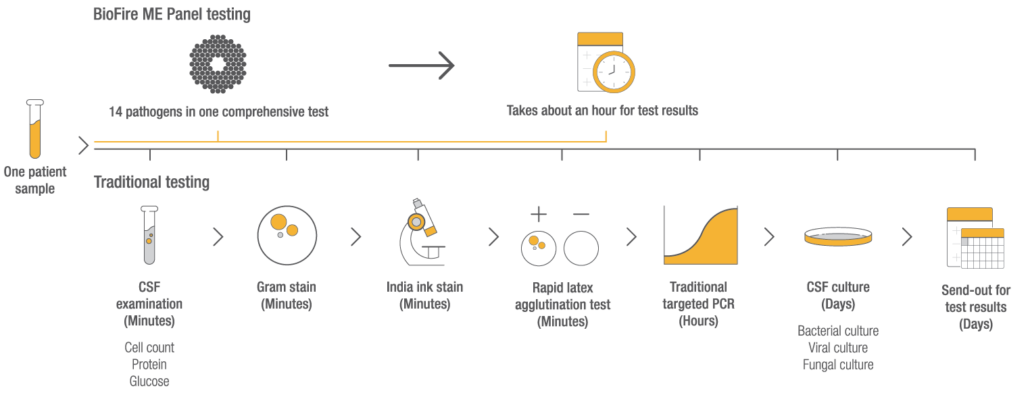
1 TEST. 14 PATHOGENS. ~1 HOUR.

The BioFire ME Panel is an FDA-cleared syndromic test that targets 14 of the most common bacterial, viral, and fungal causes of central nervous system infections.

It takes just one small sample of 0.2 mL of cerebrospinal fluid (CSF) and about an hour to deliver accurate results.

THE BIOFIRE MENINGITIS/ENCEPHALITIS PANEL MENU

Overall 94.2% Sensitivity and 99.8% Specificity1
Sample Type: Cerebrospinal Fluid (CSF) collected by lumbar puncture

BACTERIA:

● Escherichia coli K1
● Haemophilus influenzae
● Listeria monocytogenes
● Neisseria meningitidis
● Streptococcus agalactiae
● Streptococcus pneumoniae

VIRUSES:

● Cytomegalovirus (CMV)
● Enterovirus (EV)
● Herpes simplex virus 1 (HSV-1)
● Herpes simplex virus 2 (HSV-2)
● Human herpesvirus 6 (HHV-6)
● Human parechovirus (HPeV)
● Varicella zoster virus (VZV)

YEAST:

● Cryptococcus (C. neoformans/C. gattii)

Every Minute Counts When it Comes to Meningitis.

Time to diagnosis is critical. Bacterial meningitis can be fatal in healthy people in 24 to 48 hours.2 The right treatment depends on quick identification of the pathogen as bacterial, viral, or yeast.

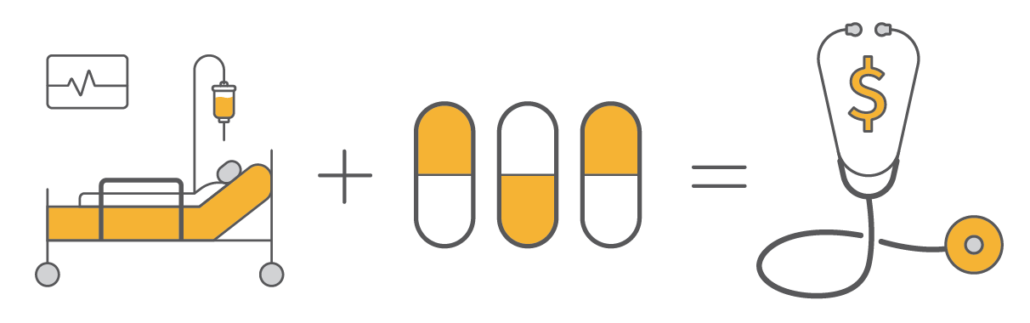
Patients with suspected meningitis are treated empirically pending diagnostic results.3,4 This can mean lengthy hospitalizations and unnecessary antimicrobial use, all of which add to the overall cost of care.

The BioFire ME Panel provides results in a clinically actionable timeframe.

Getting answers fast can be lifesaving and can help guide appropriate therapy.

Increase diagnostic yield

  • 2.7x overall increase for adult patients5
  • 2.3x overall increase for pediatric patients6

Shorten time to diagnosis*

  • 3.3-day reduction for adult patients7
  • 4-day reduction for pediatric patients4

*From time of initial presentation to the Emergency Department

Impact antimicrobial therapy

  • 2-day reduction in both acyclovir and antibiotic duration for adult patients8
  • 2-day reduction in both acyclovir and antibiotic duration for pediatric patients9

Shorten hospital stays

  • 2.2-day reduction in length of stay for adult patients8
  • 2-day reduction in length of stay for pediatric patients4

“The [BioFire ME Panel] represents a significant
paradigm shift. It is the first test system allowing
close-to-patient, rapid assessment of a broad
range of infectious agents associated with central
nervous system infections.”10

– Nationwide Children’s Hospital Columbus, OH

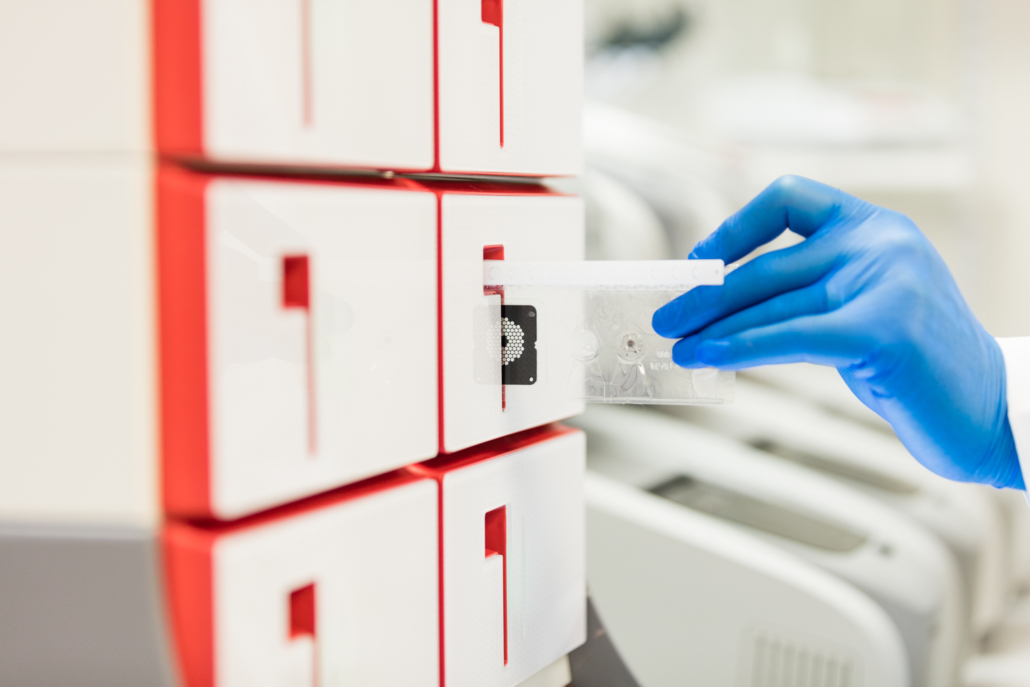
Lab technician loading a syndromic pouch into the BioFire® System.

How to Order Reagents

To order the BioFire ME Panel, contact your regional sales representative or use the following contact information:

Product Information

Product NamePart NumberQuantity
BioFire ME Panel Part NumbersRFIT-ASY-011830 Pouch Kit
BioFire ME Panel Part NumbersRFIT-ASY-01196 Pouch Kit

IDSA GuidelinesA,B

Meningitis

  • CSF cultures may take >48 hours for organism identification and are positive in 70-85% of patients with bacterial meningitis who have not received prior antimicrobial therapy; therefore, rapid diagnostic tests should be considered to determine the bacterial etiology of meningitis.
  • PCR may be useful for excluding the diagnosis of bacterial meningitis, with the potential for influencing decisions to initiate or discontinue antimicrobial therapy.
  • Rapid PCR detection of enterovirus may lead to shorter hospital stays and decreased use of antimicrobial therapy.

Encephalitis

  • >10% of patients with viral encephalitis can have normal CSF findings. Additional CSF tests, such as PCR, should be performed to establish the specific cause of encephalitis.
  • Acyclovir should be initiated in all patients with suspected encephalitis.
  • In patients who have negative herpes simplex 1 and 2 PCR results, repeat testing before modifying treatment.
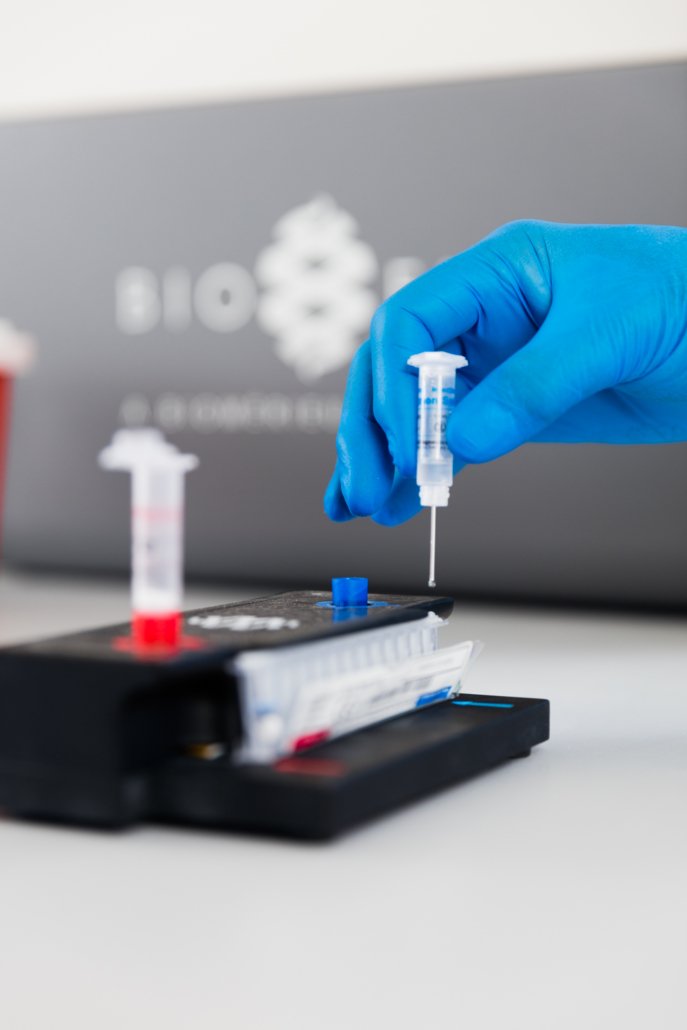
Sample medium being loaded into a syndromic testing pouch.

Don’t Guess. Know.

Take the guesswork out of pathogen identification with rapid syndromic testing from BioFire. Using multiplex PCR technology, the BioFire ME Panel combines several possible causes of central nervous system infection into one in vitro diagnostic solution.

Learn more about syndromic infectious disease testing from BioFire.

Webinars

Publications and Posters

Supporting Documents

Pneumonia

Respiratory

Gastrointestinal

Blood Culture ID

Joint Infection

Product availability varies by country. Consult your bioMérieux representative.

References

  1. Data on file, BioFire Diagnostics. The stated performance is the overall aggregate performance of the prospective clinical study data presented in the IFU.
  2. Confederation of Meningitis Organisations Fact Sheet. comomeningitis.org/facts. 2020.
  3. Bamberger D. Diagnosis, Initial Management, and Prevention of Meningitis. American Family Physician 2010 Dec 15;82:1491-1498.
  4. O’Brien M, et al. Impact of cerebrospinal fluid multiplex assay on diagnosis and outcomes of central nervous system infections in children: a before and after cohort study. The Pediatric Infectious Disease Journal 2018;37:868-71.
  5. Evans M, et al. Impact of the implementation of a rapid meningitis/encephalitis multiplex polymerase chain reaction panel on IV acyclovir duration: multicenter, retrospective cohort of adult and pediatric patients. Diagnostic Microbiology and Infectious Disease 2020;96(2):114935.
  6. Posnakoglou L, et al. Impact of cerebrospinal fluid syndromic testing in the management of children with suspected central nervous system infection. European Journal of Clinical Microbiology & Infectious Diseases Jul 2020.
  7. Cailleaux M, et al. Impact of a multiplex PCR assay (FilmArray®) on the management of patients with suspected central nervous system infections. European Journal of Clinical Microbiology & Infectious Diseases 2019;39(2):293-297.
  8. Moffa M, et al. Impact of a Multiplex Polymerase Chain Reaction Assay on the Clinical Management of Adults Undergoing a Lumbar Puncture for Suspected Community-Onset Central Nervous System Infections. Antibiotics (Basel) 2020;9(6):282.
  9. Hagen, A., Eichinger, A., Meryer-Buehn, M., Schober, T., & Huebner, J. (2020). Comparison of antibiotic and acyclovir usage before and after the implementation of an on-site FilmArray meningitis/encephalitis panel in an academic tertiary pediatric hospital: a retrospective observational study. BMC Pediatrics, 20(56). https://doi.org/10.1186/s12887-020-1944-2
  10. Lyons T, et al. Impact of in-hospital enteroviral polymerase chain reaction testing on the clinical management of children with meningitis. Journal of Hospital Medicine 2012;7:517-520.

Guidelines

A. Tunkel A, et al. Practice Guidelines for the Management of Bacterial Meningitis. Clin Infect Dis 2004;39:1267-1284.

B. Tunkel A, et al. The management of encephalitis: clinical practice guidelines by the Infectious Diseases Society of America. Clin Infect Dis 2008;47:303-327.